Fire Damage Restoration Alvarado TX | Southern Recon
A house fire is one of the most disorienting events a homeowner can face. In the hours and days after, you're dealing with shock, displacement, insurance calls, and a property that may be structurally compromised — all at once. Knowing what to do and in what order makes a significant difference in how much of your home and belongings can be saved, how smoothly your insurance claim goes, and how quickly your restoration can begin. Southern Recon has specialized in fire and water damage restoration and reconstruction throughout Alvarado and Johnson County for over 15 years. This guide gives Alvarado and North Texas homeowners a clear, honest roadmap for what to do after a house fire — from the first hour through full restoration.
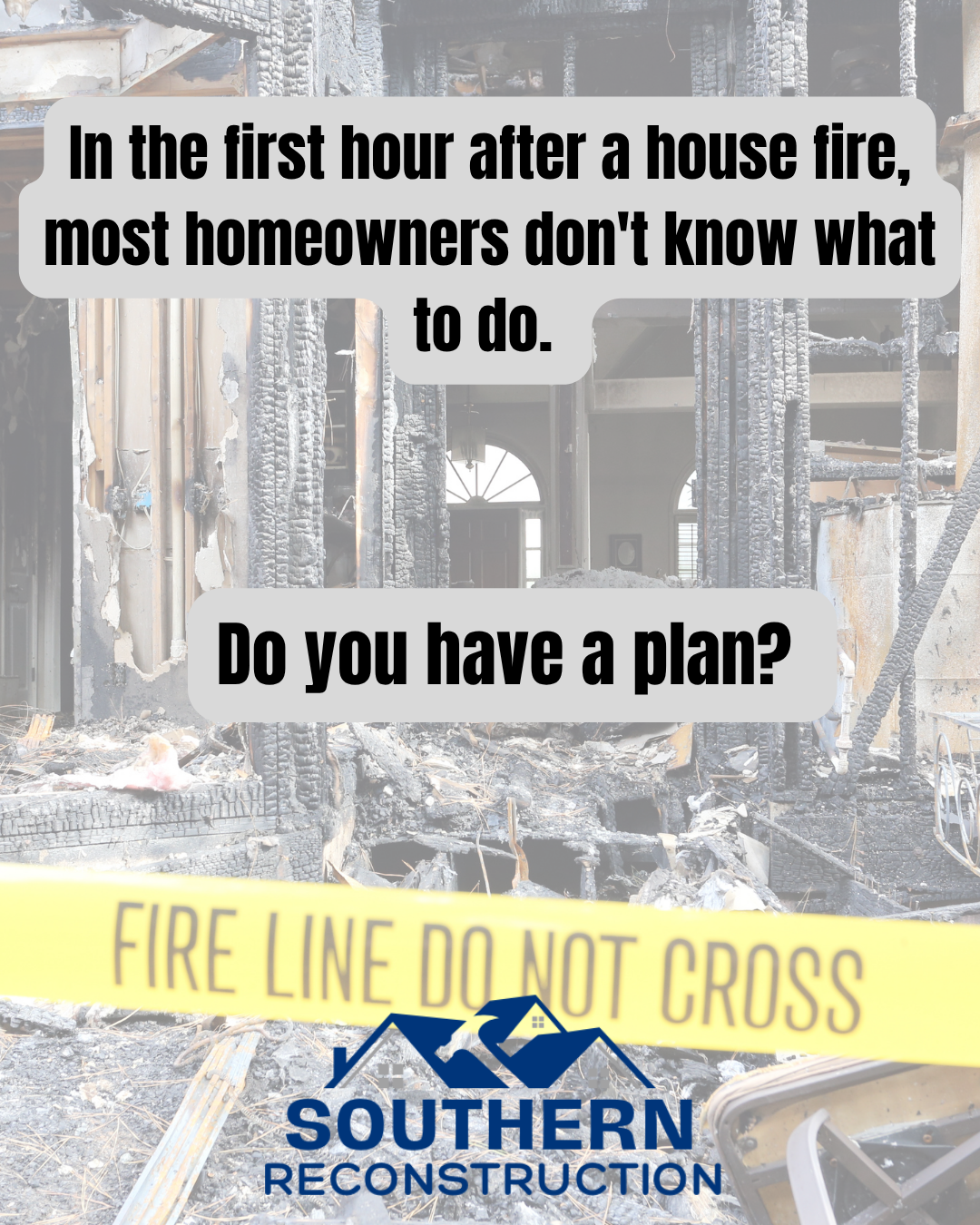
What to Do in the First 24 Hours After a House Fire in North Texas
The decisions made in the first 24 hours after a house fire have an outsized impact on restoration outcomes. Here's the correct sequence:
Hours 1–6 — Safety and security first
- Do not re-enter the home until cleared by the fire department — structural damage, electrical hazards, and toxic smoke residue make the interior dangerous even when the fire is out
- Seek medical attention immediately for anyone who experienced smoke inhalation or burns — symptoms can be delayed
- Locate pets — contact local animal control if pets are missing or displaced
- Secure the property — broken windows, open doors, and damaged roof sections need immediate board-up to prevent weather intrusion, vandalism, and unauthorized access. Southern Recon provides emergency board-up service throughout Johnson County
Hours 6–12 — Insurance and documentation
- Contact your insurance company immediately — report the loss, get a claim number, and ask specifically about Additional Living Expenses (ALE) coverage for hotel and meals while the home is uninhabitable
- Document everything before cleanup begins — photograph and video the exterior, interior, structural damage, and every damaged belonging before anything is moved, cleaned, or discarded
- Save all emergency expense receipts — hotel, food, clothing, and emergency purchases may be reimbursable under your ALE coverage
- File a police report — required for insurance purposes and for fire investigation documentation
Hours 12–24 — Professional contact and stabilization
- Call Southern Recon for professional assessment — do not attempt to clean soot, wipe down walls, or disturb damaged materials. Improper early cleanup can trap toxins, worsen soot damage, and complicate insurance documentation
- Do not turn on utilities — have gas, electrical, and water providers inspect for line damage before restoration work begins
- Contact the Red Cross if needed — emergency shelter, clothing, and meal assistance is available for displaced North Texas families
| Cause | What Happens |
|---|---|
| Cooking fires | The #1 cause of home fires nationwide — unattended stovetops and grease buildup are the biggest culprits |
| Electrical failures | Faulty wiring, overloaded circuits, and aging panels are especially common in older North TX homes |
| Heating equipment | Space heaters placed too close to flammable materials cause hundreds of fires annually |
| Dryer lint buildup | Clogged dryer vents are a leading — and entirely preventable — cause of home fires |
| Outdoor burning | Burn bans are common in North Texas for good reason — outdoor fires escape containment faster in dry, windy conditions |
| Candles and open flames | Left unattended, these are a consistent fire starter especially in windy conditions with open windows |
Understanding Fire Damage — Beyond What You Can See
Most homeowners significantly underestimate the scope of fire damage because the majority of it isn't visible. Here's what's happening in your home that requires professional assessment:
Acidic smoke residue Incomplete combustion creates fine soot particles that travel far from the fire — penetrating porous materials and leaving behind toxic, acidic residue that begins corroding metal surfaces, electronics, and finishes within hours. Soot from burning synthetics like plastics and PVC is particularly harmful — releasing acids that cause permanent staining and corrosion if not properly remediated.
Structural compromise Intense fire heat — reaching 1,000 to 1,500°F in residential fires — warps steel, weakens concrete, and compromises wood framing even in areas without visible charring. Structural assessment by a professional is required before determining what can be restored and what must be rebuilt.
Secondary water damage The water used to extinguish the fire often causes as much damage as the fire itself — saturating structural framing, drywall, and insulation. Without professional drying, water from firefighting efforts creates mold conditions within 24 to 48 hours — adding a remediation challenge on top of the fire restoration.
HVAC contamination Smoke and soot travel through air handling systems — coating ductwork and contaminating the entire HVAC system. Without thorough duct cleaning, the system continues circulating toxins through the home long after visible cleanup is complete.
The timeline of hidden damage:
- Within hours — soot causes metal tarnishing, surface discoloration, and permanent staining if untreated
- Within 24 to 48 hours — mold begins in water-saturated areas
- Within days to weeks — acidic residue causes progressive corrosion of untreated surfaces
- Within weeks — smoke odor penetrates deeper into porous materials making removal increasingly difficult
This is why immediate professional response matters — every hour of delay expands the scope and cost of restoration.
The Fire Damage Restoration Process — Step by Step
Understanding the full restoration process helps Alvarado homeowners set accurate expectations for timeline and scope:
Step 1 — Emergency assessment Southern Recon conducts a thorough safety inspection — structural integrity, water intrusion extent, soot distribution, and electrical hazards — and develops a complete restoration plan before any work begins.
Step 2 — Board-up and tarping Broken windows, compromised doors, and damaged roof sections are secured against weather, wildlife, and unauthorized access. This step protects what remains from additional damage during the restoration period.
Step 3 — Water extraction and structural drying Industrial extraction equipment removes standing water. Commercial-grade dehumidifiers and air movers begin the structural drying process — preventing mold growth in framing, subfloor, and wall cavities.
Step 4 — Smoke and soot removal Technicians use HEPA vacuums and chemical cleaners specifically formulated for soot remediation — removing corrosive residue from ceilings, walls, and surfaces. Standard cleaning products are not effective for soot and often make damage worse.
Step 5 — Odor neutralization Specialized equipment including air scrubbers, ozone generators, and thermal foggers eliminates smoke odor at a molecular level — not just masking surface smells.
Step 6 — Contents cleaning and restoration Personal belongings, furniture, clothing, and documents are assessed for restorability. Items salvageable through professional cleaning are documented for insurance and restored using appropriate techniques.
Step 7 — Structural repair and rebuilding The final phase — repairing and rebuilding damaged structural elements including drywall, flooring, roofing, and any structural framing that couldn't be saved. Southern Recon handles the full reconstruction scope as a general contractor — not just the cleanup side.
Realistic timeline expectations:
- Small, contained fires with limited smoke spread: 2 to 4 weeks
- Moderate fires with significant smoke and water damage: 6 to 12 weeks
- Major fires requiring substantial structural rebuilding: 4 to 6+ months
Smoke and Soot Damage — Why It's More Serious Than Most Homeowners Realize
Smoke and soot damage is consistently underestimated — and that underestimation leads homeowners to attempt cleanup that makes the situation worse rather than better.
Why smoke and soot damage is more serious than it looks:
Smoke particles are smaller than bacteria — they penetrate porous materials including wood, drywall, insulation, and carpet padding far beyond what's visible on the surface. A room that appears lightly affected by smoke may have contamination embedded in every surface.
Soot is acidic. Left on surfaces, it causes progressive corrosion — permanently staining and damaging finishes, metals, plastics, and electronics within hours. The longer remediation is delayed, the more permanent the damage becomes.
Health risks of soot residue: Soot contains formaldehyde, benzene, and other carcinogens. Microscopic PM2.5 particles penetrate deep into the lungs — triggering or worsening respiratory conditions. Direct skin contact causes irritation. Continued exposure in an incompletely remediated home creates ongoing health risks for the entire family.
Why DIY cleanup makes it worse:
- Water mixed with soot creates an acidic slurry that drives contamination deeper into porous surfaces
- Standard household vacuums lack HEPA filtration — they release fine soot particles back into the air rather than capturing them
- Surface cleaning addresses odor temporarily but doesn't remove acidic compounds at depth — allowing progressive damage to continue
What professional remediation uses instead: Industrial air scrubbers with HEPA filtration, ozone generators for molecular-level odor elimination, chemical sponges and specialized solvents formulated for specific soot types, and complete HVAC duct cleaning to prevent recirculation.
How to Work With Your Insurance Company After a Fire
Navigating the insurance process is one of the most important and most overwhelming parts of fire recovery. Here's how to approach it effectively:
Step 1 — Immediate notification and documentation Contact your insurer within 24 hours of the fire. Get a claim number. Ask specifically about ALE coverage limits and what documentation they require. Begin thorough photo and video documentation of all damage — every room, every damaged item — before any cleanup begins.
Step 2 — The adjuster process Your insurer will send an adjuster to assess the damage. Be present for this inspection — walk the adjuster through every affected area including areas with smoke damage that may appear minor. The adjuster creates a "scope of repairs" — review this carefully to ensure all damage is captured, including HVAC contamination, smoke damage in adjacent rooms, and water damage from firefighting.
Key protections during the claims process:
- You are not required to accept the first settlement offer — you can request itemized adjustments based on contractor estimates
- Verify the adjuster's identity before allowing access — post-disaster scammers sometimes impersonate adjusters
- Do not discard any damaged items until the adjuster has documented them — even items that appear unsalvageable
What Southern Recon provides for your insurance claim:
- Detailed line-item written estimates using industry-standard documentation
- Before and after photography of every remediation and repair phase
- Moisture logs and content inventories for adjuster review
- Full coordination with your insurance company throughout the restoration process
Know your policy type:
- Actual Cash Value (ACV) policies pay the depreciated value of damaged items
- Replacement Cost Value (RCV) policies pay the cost to replace items — typically a significantly better outcome for homeowners
Why Choosing a Local North Texas Restoration Contractor Matters
After a fire in Alvarado or Johnson County, you'll likely receive calls and door-knocks from out-of-area restoration companies within hours of the event. Here's why that matters — and what to watch for:
What storm chasers and out-of-area crews do:
- Prioritize high-volume, fast work over quality restoration — creating issues that surface months after they've left the area
- Piecemeal repairs that address visible damage while leaving underlying structural and contamination issues unresolved
- Apply pressure to sign contracts immediately before you've had time to assess your options or speak with your insurance company
- Provide no local accountability — once they move to the next disaster, warranty follow-up becomes essentially impossible
What a locally based contractor provides:
- Deep familiarity with Johnson County and North Texas building codes, permit requirements, and insurance adjuster relationships
- Fast response from a company based 20 minutes away — not dispatched from out of state
- Accountability that matters — a contractor who lives and operates in this community depends on local reputation for every job
- A complete contractor relationship from emergency stabilization through full structural rebuilding — not just the cleanup phase
How to verify any contractor before signing:
- Confirm a physical local address — not just a P.O. box or out-of-state number
- Request proof of Texas licensing, bonding, and insurance
- Ask for local references and verifiable reviews from Johnson County homeowners
Fire Prevention Tips for North Texas Homes
The best fire recovery is the one you never need. Here are the prevention measures most relevant to Alvarado and North Texas homeowners:
Outdoor and property protection:
- Maintain a 30-foot safety zone around the home by clearing dry grass, dead leaves, and debris from roofs, gutters, and yards — particularly important during North Texas's hot, dry summers
- Keep tree limbs trimmed 6 to 10 feet from the ground and 15 feet from chimneys
- Keep grills at least 10 feet from the home, deck railings, and trees — never leave unattended on hot, windy days
- Avoid running lawnmowers over dry grass — hot engine surfaces can ignite dry vegetation
Indoor fire safety:
- Never leave cooking unattended — kitchen fires are the leading cause of residential fires in Texas
- Avoid overloading circuits and extension cords — particularly relevant in older Johnson County homes
- Keep space heaters at least 3 feet from curtains, furniture, and bedding
- Clean dryer lint filters after every load and inspect the exhaust vent annually
Emergency preparedness:
- Install smoke alarms on every level, inside every bedroom, and outside sleeping areas — test monthly
- Create and practice a family fire escape plan twice a year
- Keep important documents, prescriptions, and essential items in a designated location for quick retrieval in an emergency
Southern Recon: Fire Damage Restoration Throughout Alvarado and Johnson County TX
When a fire happens, you need a restoration partner who can respond fast, handle everything from emergency stabilization through complete reconstruction, and guide you through the insurance process without adding to the chaos. Southern Recon has been serving Alvarado and surrounding Johnson County communities since 2008 — specializing in fire and water damage insurance restoration and full-scale reconstruction.
Here's what you get with Southern Recon:
| What We Provide | What It Means for You |
|---|---|
| Emergency response | Fast board-up, tarping, and stabilization — we respond when you need it, not on a scheduled timeline |
| Complete restoration scope | From emergency cleanup through full structural reconstruction — one company handles everything |
| Insurance claim support | Line-item estimates, documentation, and direct coordination with your adjuster throughout the process |
| Local accountability | Based in Alvarado since 2008 — we're your neighbors, and we stand behind every job we complete |
| Fire and water damage expertise | Smoke and soot remediation, water extraction, structural drying, odor elimination, and full rebuilding |
| Transparent process | You know what's happening, what it costs, and what timeline to expect at every phase |
Don't navigate fire recovery alone. Southern Recon is ready to respond throughout Alvarado, Johnson County, and surrounding North Texas communities.
Recent Posts

Work With the Top Remodeling Contractors in Alvarado, TX
Don’t wait to transform your home into a space you’ll love. Southern Reconstruction Group is here to handle every detail with skill and dedication.


